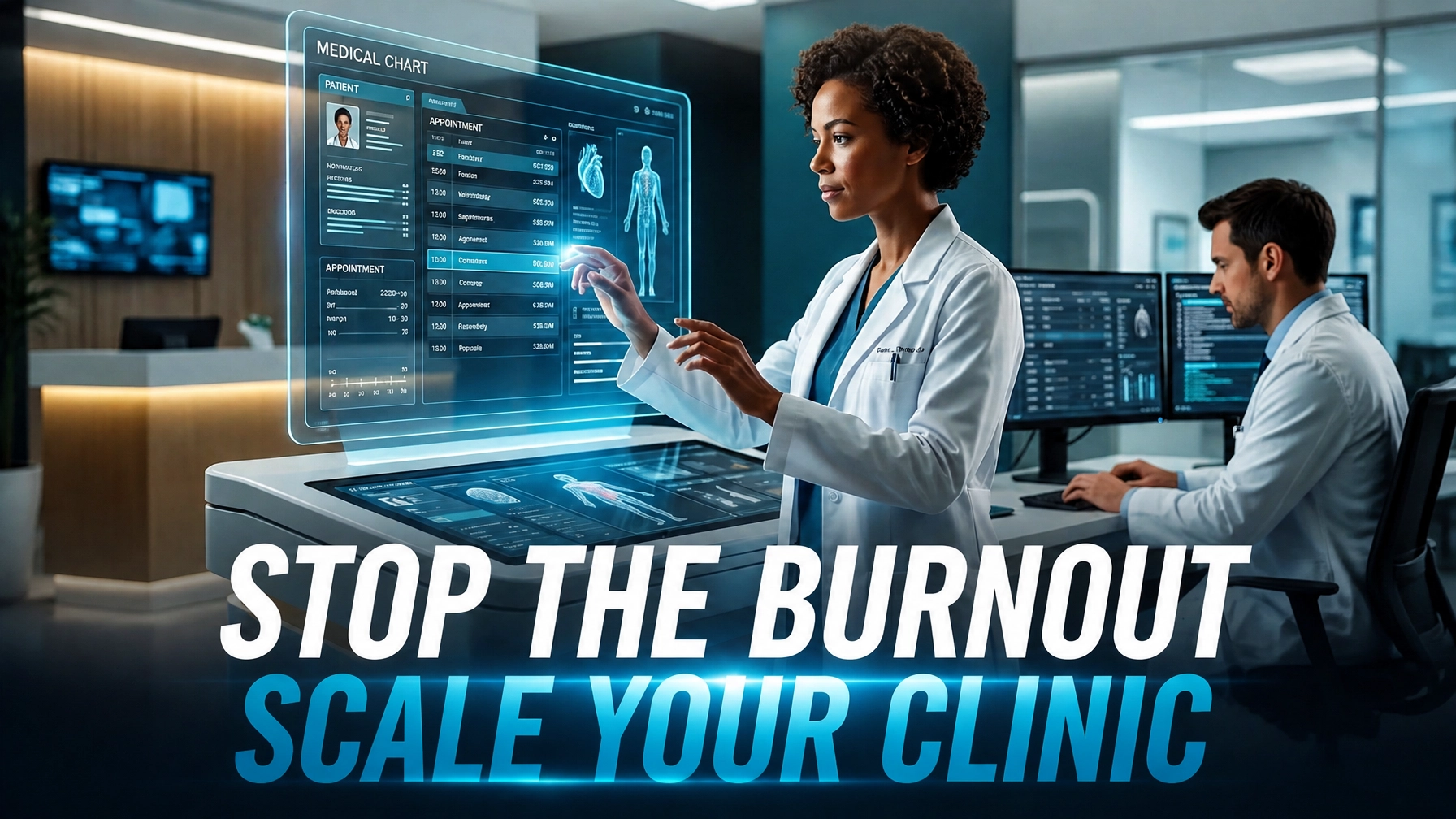
The 2026 healthcare landscape is defined by a paradoxical struggle: practitioners have more high-tech clinical tools than ever, yet patient-facing time is at an all-time low. You are likely familiar with "Burnout Debt": the compounding exhaustion that stems from spending four hours on documentation for every one hour spent with a patient. When your clinical staff is buried under a mountain of charting, prior authorizations, and complex billing modifiers, your practice isn’t just losing time; it’s experiencing systemic revenue leakage.
Scaling clinical efficiency in this environment requires moving beyond traditional staffing models. The modern blueprint for a high-performing practice relies on a specialized Medical Virtual Assistant to act as the administrative engine. By integrating a professional human VA into your workflow for just $8 per hour, you effectively eliminate the $60,000+ annual overhead of an in-house administrator while gaining a dedicated expert in EHR management and clinical coordination.
The End of "Note Bloat": Systematizing Clinical Documentation
In 2026, ambient listening technologies are common in exam rooms, but they have introduced a new problem: "Note Bloat." These systems often generate massive, unformatted blocks of text that require significant manual editing to meet medical-legal standards. A Medical Virtual Assistant solves this by acting as your clinical editor in real-time.
While you move from one patient to the next, your VA reviews the drafted clinical notes, ensures they follow your specific internal SOPs, and populates the relevant fields within your EHR. This ensures that by the time you sit down to sign off at the end of the day, your charts are already 95% complete. You are no longer "taking work home"; you are finalizing a streamlined process managed by a professional.
This level of support extends to the preparation phase. A VA can pre-chart your entire day by reviewing patient histories, identifying missing lab results, and flagging high-risk indicators before the patient even walks through the door. This proactive approach transforms the visit from a data-entry session into a true clinical interaction.
HIPAA 2026 Readiness: Navigating Security Rule 2.0 and Zero-Trust
Compliance anxiety is reaching a fever pitch with the full implementation of HIPAA Security Rule 2.0. The focus has shifted from simple password protection to a "Zero-Trust" environment and HITRUST-aligned standards. For an independent practice or a growing dental office, maintaining these standards manually is nearly impossible.
A Medical Virtual Assistant from Virtual Nexgen Solutions is trained specifically in these 2026 compliance protocols. They manage the "digital perimeter" of your practice by:
- Conducting Continuous Access Audits: Ensuring only active staff have EHR access and managing the immediate offboarding of departing employees.
- Securing Patient Communications: Managing encrypted portals so that sensitive health information never touches insecure channels like standard SMS or unencrypted email.
- Data Governance: Standardizing how patient files are labeled, stored, and shared with third-party specialists to maintain a clear audit trail.
Whether you are seeking a Medical or a Dental Virtual Assistant, having a dedicated gatekeeper for HIPAA compliance reduces your liability and ensures your practice remains audit-ready without draining your clinical team's energy.
Specialized EHR Workflows: Epic and AthenaHealth Mastery
The EHR is the heart of your practice, but for many providers, it feels like a ball and chain. Systems like Epic and AthenaHealth are powerful, but their complexity often leads to "click fatigue." Scaling efficiency requires an expert who understands the nuances of these platforms.
A specialized Medical Virtual Assistant does not just "enter data." They optimize the workflow within the system. They handle the "paperwork chase" that stalls patient care. For instance, in an AthenaHealth environment, your VA can manage the "buckets" of incoming faxes, lab results, and pharmacy requests, ensuring each task is routed to the correct clinician with the necessary context already attached.
In Epic workflows, they can manage the InBasket, filtering out the noise and highlighting only the urgent clinical communications that require your direct intervention. By offloading these 20–30 daily administrative clicks per patient to an $8/hour professional, you reclaim hours of billable time every week.
Revenue Cycle Management: Solving the 2026 CMS Modifier Literacy Gap
Revenue leakage often happens in the smallest details of the Revenue Cycle Management (RCM) process. With the updated CMS 2025/2026 billing guidelines, modifier literacy has become a major pain point for practices. If your billing codes are even slightly misaligned with updated clinical documentation requirements, denials skyrocket.
Your Medical Virtual Assistant acts as the first line of defense against claim denials. They are trained to:
- Verify insurance eligibility 48 hours before the appointment.
- Cross-reference clinical notes with the latest ICD-10 and CPT codes to ensure modifier accuracy.
- Track denied claims immediately, identifying the root cause and resubmitting within 24 hours.
This proactive RCM management ensures your "Clean Claim Rate" stays above 95%, directly impacting your practice's bottom line. When you consider that a single billing error can cost hundreds of dollars in delayed or lost revenue, the ROI of a specialized VA becomes undeniable. You can learn more about how systematized processes reduce overhead in our guide on 7 tools to cut admin costs.
SOP: Integrating a Medical VA into Your Patient Intake Workflow
To achieve maximum clinical efficiency, you must have a standardized operating procedure. Below is a tactical SOP for integrating a Virtual Assistant into your patient intake process to ensure no revenue or data is lost.
Step 1: The 48-Hour Pre-Check
The VA reviews the schedule two days in advance. They use your EHR (Epic, Athena, or EZLynx for insurance-adjacent roles) to verify active coverage. If coverage is inactive, the VA contacts the patient immediately to update their information, preventing a "dead slot" in your schedule.
Step 2: Clinical Data Gathering
The VA sends digital intake forms to the patient. Once returned, the VA manually maps this data into the EHR. They specifically look for medications, allergies, and recent hospitalizations, ensuring the "Clinical Summary" is current for the provider.
Step 3: Real-Time Chart Prep
One hour before the clinic opens, the VA leaves a "Provider Brief" in the EHR internal messaging system for each patient. This brief highlights the reason for the visit and any missing checkboxes (e.g., "Patient is due for an A1C test").
Step 4: Post-Visit Task Execution
Immediately following the encounter, the VA executes all orders. This includes sending e-prescriptions, scheduling follow-up specialist referrals, and ensuring the "Superbill" is accurately reflected in the billing module.
Stopping the Profit Leakage in Specialized Practices
While general practices benefit immensely, specialized fields like Dental, Physical Therapy, and Mental Health face unique administrative hurdles. A Dental Virtual Assistant, for example, manages the high-volume coordination between insurance providers and specialized labs.
In a dental setting, profit leakage often occurs when pre-authorizations for major procedures (like crowns or implants) are not followed up on. A VA ensures that every pending authorization is tracked weekly. They communicate with patients to schedule the work as soon as the approval hits, keeping the chairs full and the revenue steady.
Whether you are managing a law firm (which you can read about in our other industry blueprints) or a busy surgical center, the principle remains the same: Human expertise, applied to administrative tasks, allows the high-value practitioner to focus on the work only they can do.
Transitioning to a Scalable Model
The transition from a "cluttered" office to a streamlined clinical environment doesn't happen by accident. It requires a partner who understands that healthcare is not a "general" admin field. It requires HIPAA-trained professionals who understand the stakes of a misfiled report or a security breach.
Virtual Nexgen Solutions provides this bridge. By leveraging a highly skilled Medical Virtual Assistant, you are not just "hiring help"; you are installing a sophisticated administrative infrastructure designed for the 2026 healthcare economy. At $8 per hour, you are choosing a model that scales with your patient volume without the "Burnout Debt" that traditional hiring brings.
Stop the burnout. Scale your storefront. Ensure your practice is prepared for the next era of clinical efficiency.
Frequently Asked Questions
1. Is a Medical Virtual Assistant really HIPAA compliant?
Yes. At Virtual Nexgen Solutions, our VAs are trained on HIPAA Security Rule 2.0 and HITRUST standards. They operate within secure, encrypted environments and follow strict data governance protocols, ensuring that your patient data is handled with the same level of security as an in-house employee.
2. Can a VA work directly within my EHR like Epic or AthenaHealth?
Absolutely. Our VAs are experienced in major EHR platforms including Epic, AthenaHealth, eClinicalWorks, and specialized dental software. They can manage charting, InBasket tasks, and patient portal communications directly within your existing system.
3. How does a $8/hour VA compare to a $60k/year in-house admin?
The cost savings are significant, but the value is in the specialization. An in-house admin often juggles physical tasks (like rooming patients) with digital admin, leading to errors. A Virtual Assistant is 100% focused on your digital workflows, billing modifiers, and documentation, providing higher accuracy at a fraction of the cost.
4. What if I need a Dental Virtual Assistant specifically?
We offer niche-specific support. A Dental Virtual Assistant focuses on tasks like dental insurance verification, pre-authorizations for specialized procedures, and lab case tracking, which are unique to the dental industry.
5. Can a VA help with Revenue Cycle Management (RCM)?
Yes. VAs are highly effective at reducing "Profit Leakage" by verifying insurance eligibility before appointments, ensuring correct billing modifiers are used, and managing the denial appeals process to keep your cash flow consistent.
6. Do they help with patient scheduling and follow-ups?
Yes. Managing the schedule is a core VA task. They handle everything from initial booking and appointment coordination to post-visit follow-up calls, ensuring a high patient retention rate.
7. How long does it take to integrate a VA into my practice?
With our standardized SOPs, integration is rapid. Once we understand your specific EHR workflow and practice preferences, a VA can be fully operational within your system in as little as 48 to 72 hours.
8. What is the main benefit for a doctor or clinic owner?
The primary benefit is reclaiming your time. By offloading the "Admin Debt" of documentation and billing to a VA, you can see more patients per day or simply go home on time, effectively ending the cycle of clinician burnout.
Ready to reclaim your clinical efficiency?
Don't let administrative debt and revenue leakage hold your practice back. Book a strategy session today to see how a specialized Medical Virtual Assistant can transform your operations.