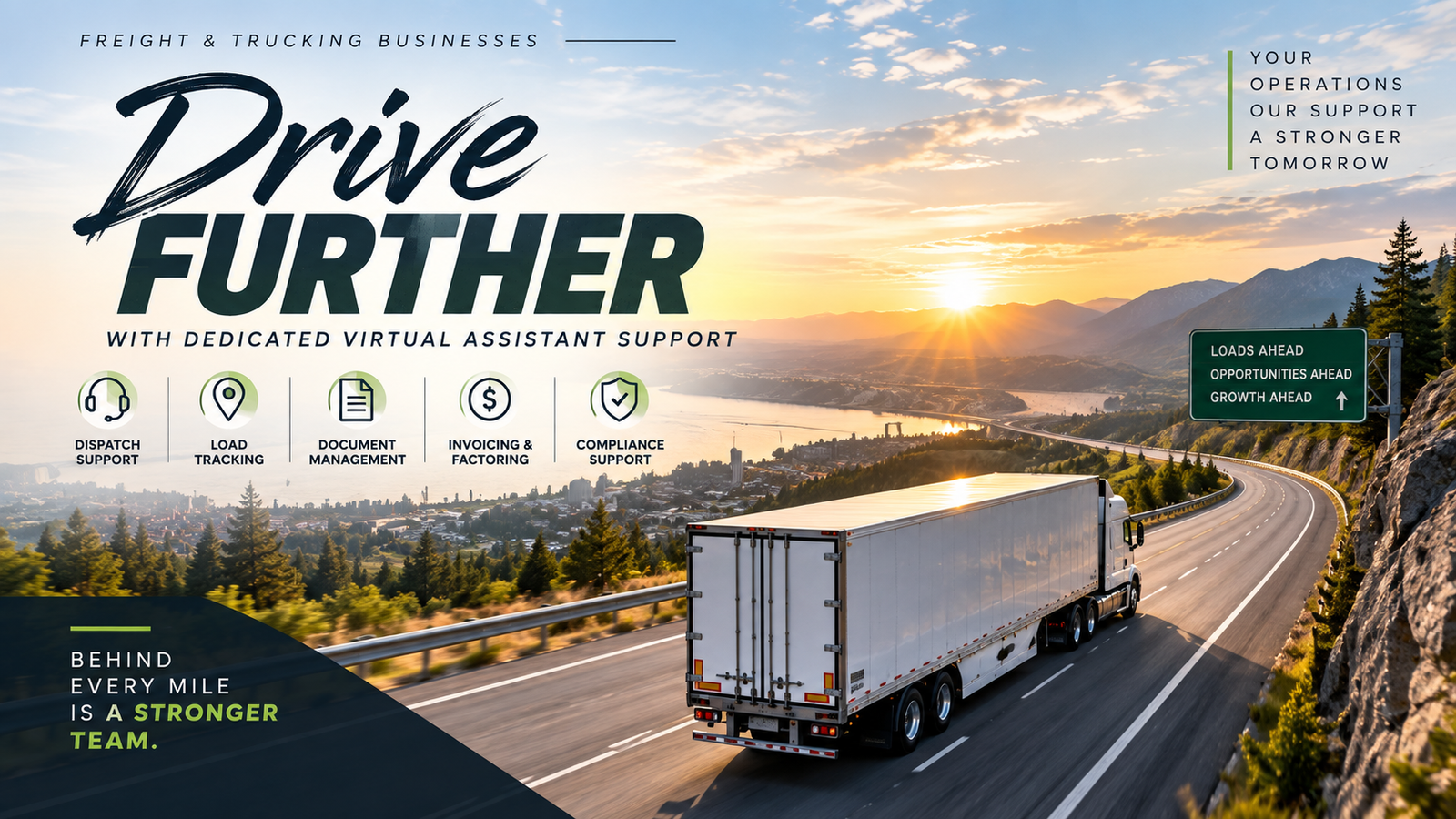
Running a freight or trucking company means managing much more than trucks and loads. Dispatchers and owners constantly deal with driver communication, load updates, broker emails, BOLs, PODs, invoices, factoring paperwork, carrier packets, and compliance documentation.
When these administrative responsibilities pile up, valuable time gets taken away from dispatching, customer service, and business growth.
A Freight & Trucking Virtual Assistant can provide dedicated back-office support for these repetitive workflows, helping trucking companies keep information organized while their core team stays focused on moving freight.
What Does a Freight & Trucking Virtual Assistant Do?
A Freight & Trucking Virtual Assistant provides specialized administrative support for carriers, fleet owners, freight brokers, and logistics companies.
Depending on the company's workflow, a trucking VA can assist with:
- Dispatch and load administration
- Driver communication
- Load tracking
- BOL and POD management
- Rate confirmations
- Invoice preparation
- Factoring submissions
- Carrier packets
- Detention and TONU documentation
- CRM and TMS updates
- Compliance administration
The objective is not to replace experienced dispatchers or operations managers. Instead, a VA handles structured administrative work that can otherwise consume hours of their day.
Why Freight & Trucking Companies Need Back-Office Support
Every shipment generates administrative work.
A load may begin with a broker inquiry, continue through rate confirmation and driver assignment, require multiple status updates, and end with delivery paperwork and invoicing.
If even one document or follow-up is missed, the next step can be delayed.
Technology has also made documentation and tracking increasingly important. FMCSA states that electronic logging devices help carriers accurately track, manage, and share driver driving and off-duty information. The agency continues to remove ELDs that fail to meet federal requirements, making proper administrative oversight increasingly important for motor carriers.
Dispatch and Load Management
Dispatch teams often manage multiple loads simultaneously.
A trucking VA can support the administrative side of dispatch by:
- Monitoring approved load boards
- Entering loads into the TMS
- Recording pickup and delivery information
- Updating load statuses
- Organizing rate confirmations
- Tracking appointment times
- Maintaining dispatch records
This gives dispatchers a cleaner workflow and reduces the amount of repetitive data entry they need to handle themselves.
Driver Communication and Load Tracking
Drivers need clear information, while brokers and customers often need shipment updates.
A VA can support routine communication such as:
- Pickup confirmations
- Delivery confirmations
- Check calls
- ETA updates
- Appointment reminders
- Document requests
- Broker status updates
The VA can record these updates in the appropriate system and escalate exceptions to the dispatcher or operations manager.
This creates a practical workflow where drivers provide operational information, the VA maintains the administrative record, and the appropriate manager handles decisions and exceptions.
BOL, POD and Freight Documentation
Paperwork is one of the most important back-office workflows in trucking.
A Freight & Trucking Virtual Assistant can help collect and organize:
- Bills of Lading
- Proofs of Delivery
- Rate confirmations
- Lumper receipts
- Detention documentation
- TONU documentation
- Carrier packets
- Insurance documents
Once a delivery is completed, the VA can check whether required documents have been received, organize them according to the company's SOP, and route them to billing or factoring.
This creates a smoother transition from delivered load → completed paperwork → invoice submission.
Billing and Factoring Support
Completing a load does not necessarily mean the administrative work is finished.
A VA can support the billing workflow by:
- Collecting the signed POD.
- Organizing the BOL and rate confirmation.
- Checking for required documentation.
- Preparing invoice information.
- Submitting approved documents to factoring or customer portals.
- Tracking outstanding submissions.
- Following up on missing paperwork.
This can help trucking companies reduce delays between delivery and payment without requiring dispatchers to manage every billing-related task.
Detention, Layover and TONU Administration
Accessorial charges can require careful documentation.
A VA can maintain records related to:
- Arrival and departure times
- Loading and unloading delays
- Detention
- Layovers
- TONU
- Lumper charges
The VA can organize supporting documents and prepare the information according to company procedures.
The actual approval or negotiation of charges should remain with the appropriate company personnel.
Carrier Packets and Broker Setup
New broker relationships often require multiple documents before a carrier can begin hauling.
A trucking VA can help organize and submit approved information such as:
- W-9 forms
- Certificates of insurance
- Carrier agreements
- Operating authority information
- Contact details
- Broker setup forms
- Payment documentation
A standardized carrier-packet process reduces repetitive administrative work and helps prevent missing documents from delaying setup.
Compliance Administration
Compliance requires careful attention to records and deadlines.
A VA can provide administrative support with:
- Document expiration tracking
- Driver file organization
- Insurance renewal reminders
- Permit tracking
- ELD documentation
- Compliance checklists
- Internal record organization
The VA should follow established procedures and escalate compliance questions to the appropriate qualified personnel.
FMCSA specifically advises motor carriers to verify that their ELD is on the agency's registered, self-certified list.
Building a Complete Freight Operations Workflow
The biggest advantage of a specialized VA comes from connecting individual tasks into one repeatable workflow:
Load Sourced ↓ Rate Confirmed ↓ Driver Assigned ↓ Pickup Scheduled ↓ Load Tracked ↓ Delivery Confirmed ↓ BOL/POD Collected ↓ Invoice Submitted ↓ Payment Tracked
Each stage can have a defined owner, checklist, deadline, and escalation process.
This allows the VA to become part of the company's operating system rather than simply handling random administrative tasks.
Who Can Benefit From a Trucking Virtual Assistant?
A specialized Freight & Trucking Virtual Assistant can support:
- Owner-operators
- Small and mid-sized trucking companies
- Fleet owners
- Freight brokers
- 3PL companies
- Logistics companies
- Dispatch operations
- Growing carrier businesses
Support can be structured around specific functions such as billing and documentation or expanded into broader dispatch and back-office coordination.
Frequently Asked Questions
What does a Freight & Trucking Virtual Assistant do?
A Freight & Trucking Virtual Assistant provides administrative support for dispatch, load tracking, driver communication, documentation, billing, factoring, carrier packets, and other trucking back-office workflows.
Can a trucking VA help with dispatch?
Yes. A trained VA can support load-board administration, TMS updates, appointment coordination, driver communication, and routine load tracking. The exact responsibilities should be defined by the carrier.
Can a trucking VA manage BOL and POD paperwork?
Yes. Collecting, organizing, and routing BOL and POD documents is a common trucking administrative responsibility.
Can a trucking VA help with factoring?
Yes. A VA can organize invoices and delivery documents, submit approved paperwork, and track outstanding factoring submissions.
Can a trucking VA support compliance?
A VA can assist with administrative compliance tasks such as document tracking, expiration reminders, record organization, and checklists. Regulatory decisions should remain with qualified personnel.
Final Thoughts
Freight and trucking companies manage a constant flow of loads, drivers, brokers, documents, payments, and compliance information.
When all of that administrative work stays with the owner or dispatcher, it can become difficult to maintain consistent processes as the business grows.
A Freight & Trucking Virtual Assistant can provide the dedicated administrative layer needed to keep dispatch support, load tracking, paperwork, billing, factoring, and follow-ups organized.
The goal is simple: keep the back office moving as efficiently as the freight.
If your team is spending too much time chasing paperwork, updating systems, communicating routine load information, or following up on documents, a VNS Virtual Assistant can help build a more organized trucking support workflow.