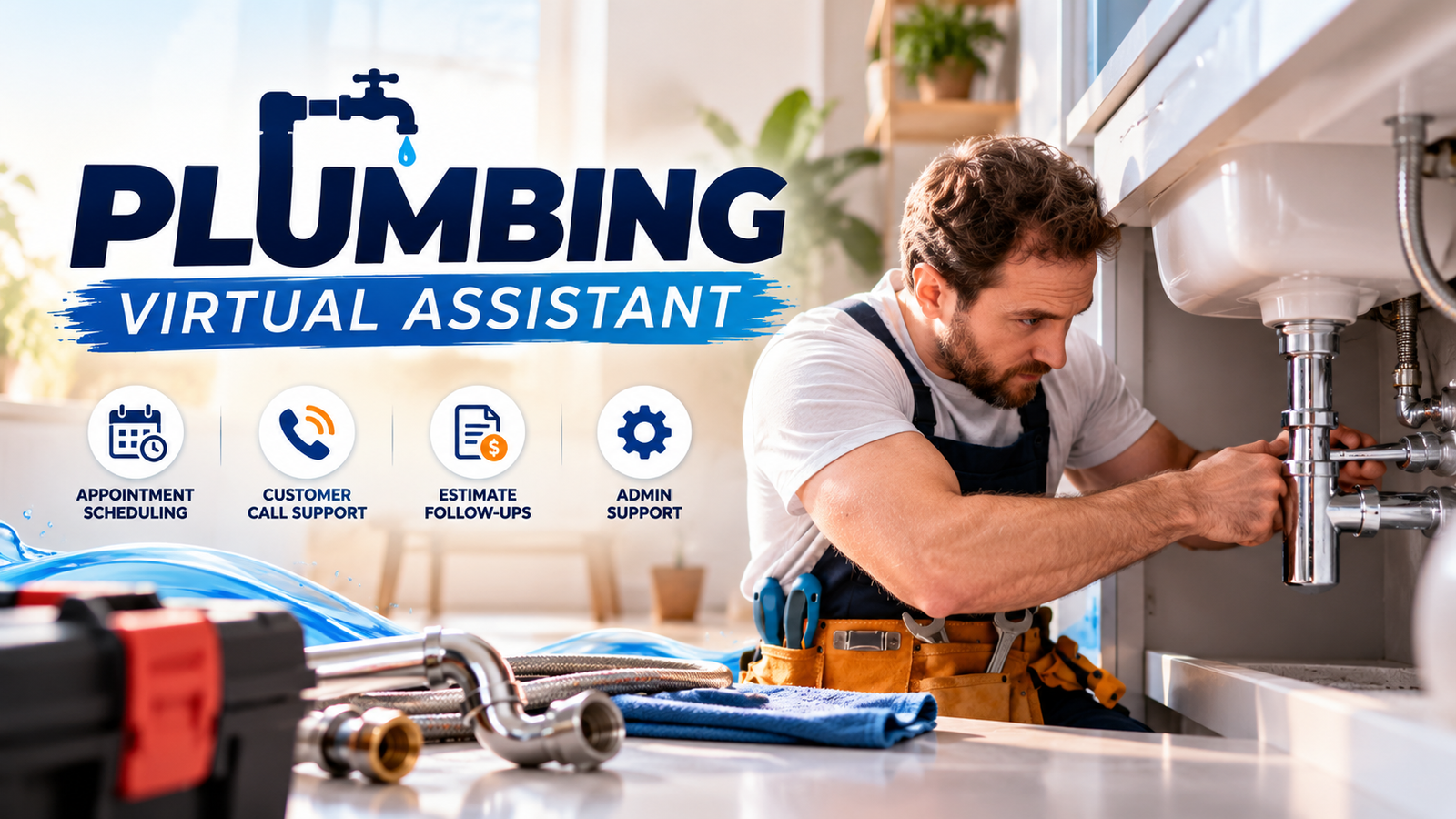
Running a plumbing business involves much more than repairing pipes, clearing drains, and installing fixtures. Every service call creates administrative work—from answering customer inquiries and booking appointments to coordinating technicians, preparing invoices, and following up on estimates.
When these responsibilities compete with fieldwork, important calls can be missed, schedules become harder to manage, and customer follow-ups may fall behind.
A Plumbing Virtual Assistant helps plumbing companies manage these daily administrative responsibilities remotely. By delegating routine office tasks to a dedicated Virtual Assistant, plumbing business owners and technicians can spend more time serving customers while keeping business operations organized.
What Is a Plumbing Virtual Assistant?
A Plumbing Virtual Assistant is a remote professional who supports the administrative and customer service operations of a plumbing business. Depending on your needs, they can help manage incoming calls, schedule appointments, coordinate service requests, update customer records, follow up on estimates, and organize invoices.
A plumbing VA works within your established procedures and uses your approved communication channels and business software. They support your team without replacing licensed plumbers or making technical decisions that require plumbing expertise.
For residential plumbing companies, commercial plumbing contractors, drain-cleaning businesses, and plumbing service providers, this support can help create a more consistent administrative process.
7 Ways a Virtual Assistant Can Support Your Plumbing Business
1. Manage Customer Calls and Service Inquiries
Plumbing customers often need prompt responses, particularly when dealing with leaks, clogged drains, water heater problems, or other urgent issues. When your team is working on-site, answering every call can be difficult.
A Plumbing Virtual Assistant can:
- Answer incoming calls using your approved scripts.
- Collect customer contact details and service addresses.
- Record the customer's description of the problem.
- Identify requests that require urgent attention according to your procedures.
- Forward technical questions and emergencies to the appropriate team member.
- Record missed calls and arrange callbacks.
This gives customers a clear point of contact and helps your team keep track of incoming service requests.
2. Schedule Appointments and Coordinate Dispatch
Scheduling is central to keeping a plumbing operation organized. Appointment changes, technician availability, travel time, and emergency requests can make daily coordination challenging.
A Virtual Assistant can help maintain the service calendar, confirm appointments, send reminders, update schedule changes, and communicate relevant details to technicians.
They can also assist with dispatch administration by keeping job records current and notifying the appropriate team members of approved schedule changes.
Your dispatcher or operations manager retains control over technician assignments, emergency priorities, and decisions requiring technical judgment.
3. Follow Up on Estimates and Service Leads
Sending an estimate does not always result in a booked job. Customers may need clarification, time to review a proposal, or a reminder to respond.
A Plumbing Virtual Assistant can maintain a list of outstanding estimates, send follow-up messages, record customer responses, and notify your team when a prospect is ready to proceed.
They can also follow up with previous customers about approved maintenance offerings or scheduled services.
Consistent follow-up helps prevent opportunities from being overlooked and keeps your sales pipeline organized.
4. Support Invoicing and Payment Follow-Ups
Administrative delays can affect the billing process. When job details are incomplete or invoices are not sent promptly, payment follow-ups can become harder to manage.
A Virtual Assistant can help with:
- Preparing invoices using approved job information.
- Checking that required documentation is available.
- Sending invoices after authorized review.
- Tracking outstanding payments.
- Sending polite payment reminders.
- Updating payment records and reporting discrepancies.
Your bookkeeping or management team can retain responsibility for financial approvals, adjustments, refunds, and other decisions requiring authorization.
5. Maintain Customer Records and Plumbing Software
Accurate records help plumbing businesses track service history, customer communication, appointments, and outstanding work.
A Plumbing Virtual Assistant can update customer profiles, enter job notes provided by technicians, maintain contact information, and organize service records.
Depending on your existing systems and the VA's training, support may include platforms such as ServiceTitan, Housecall Pro, Jobber, or Service Fusion.
Keeping records current helps your team find information more easily and reduces the need to repeatedly request details from customers or technicians.
6. Coordinate Maintenance Reminders and Customer Follow-Ups
Plumbing businesses may serve customers who need recurring maintenance, inspections, or follow-up visits. Without a consistent process, these opportunities can be missed.
A Virtual Assistant can maintain reminder lists, contact customers according to your schedule, confirm upcoming appointments, and record responses.
They can also assist with post-service follow-ups, customer feedback requests, and review requests using your approved messaging.
These activities help maintain communication with existing customers and support a more organized customer experience.
7. Organize Daily Administrative and Back-Office Tasks
Beyond customer-facing work, plumbing companies handle a steady flow of emails, documents, reports, and internal updates.
A Virtual Assistant can help organize shared inboxes, maintain spreadsheets, prepare routine reports, update job documentation, and track pending administrative tasks.
They can also help coordinate information between office staff, technicians, suppliers, and management.
The goal is to establish a dependable administrative process so important tasks are less likely to be forgotten during busy service periods.
How a Plumbing Virtual Assistant Helps Your Business
Delegating administrative responsibilities can support your plumbing business in several practical ways.
More time for fieldwork: Technicians and owners can spend less time managing routine office tasks.
More consistent customer communication: Calls, appointment confirmations, and follow-ups can be handled through an established process.
Better scheduling visibility: Updated calendars and job records help your team understand upcoming work.
Organized billing processes: Invoice preparation and payment reminders can be tracked consistently.
Support as your business grows: A dedicated VA can take on an agreed set of responsibilities as your administrative workload changes.
The results depend on your business volume, the tasks delegated, the quality of your procedures, and how the VA is trained and supervised.
Getting Started With a Plumbing Virtual Assistant
Start by identifying the administrative tasks that consume the most time or frequently fall behind. For many plumbing businesses, these include call handling, appointment scheduling, estimate follow-ups, invoice tracking, and customer record management.
Next, document your preferred workflows. Provide call scripts, scheduling rules, software instructions, escalation procedures, and clear guidelines about which decisions require approval.
Finally, establish measurable expectations. You might track appointment confirmations, outstanding estimate follow-ups, invoice processing time, record accuracy, and completed administrative tasks.
Begin with a defined scope of work, review performance regularly, and expand responsibilities as your VA becomes familiar with your business.
Frequently Asked Questions
What does a Plumbing Virtual Assistant do?
A Plumbing Virtual Assistant supports administrative tasks such as customer calls, appointment scheduling, dispatch coordination, estimate follow-ups, invoicing, CRM updates, and customer communication.
Can a Plumbing Virtual Assistant answer customer calls?
Yes. A VA can answer calls, collect service information, book appointments, and route urgent or technical matters according to your procedures.
Can a Virtual Assistant use plumbing software?
A trained VA may work with platforms such as ServiceTitan, Housecall Pro, Jobber, and Service Fusion, depending on their experience and the access and training your business provides.
Can a Plumbing Virtual Assistant handle emergency calls?
A VA can collect information, follow your documented emergency-call procedure, and promptly escalate the request to your designated team. Technical diagnosis and emergency response decisions should remain with qualified personnel.
Is a Plumbing Virtual Assistant suitable for a small plumbing company?
Yes. Small plumbing businesses can delegate selected administrative tasks without needing to hire an additional in-house office employee. The appropriate arrangement depends on workload, coverage requirements, and budget.
Keep Your Plumbing Business Moving With Virtual Nexgen Solutions
Your team should be able to focus on plumbing work and customer service—not spend every day catching up on calls, scheduling, paperwork, and follow-ups.
Virtual Nexgen Solutions provides dedicated, industry-focused Virtual Assistants to help plumbing businesses manage customer communication, appointments, lead follow-ups, invoicing, and back-office administration.
Ready to delegate the busywork and give your team more time to grow? Partner with Virtual Nexgen Solutions for reliable, industry-focused Virtual Assistant support tailored to your business needs.
Book a Call