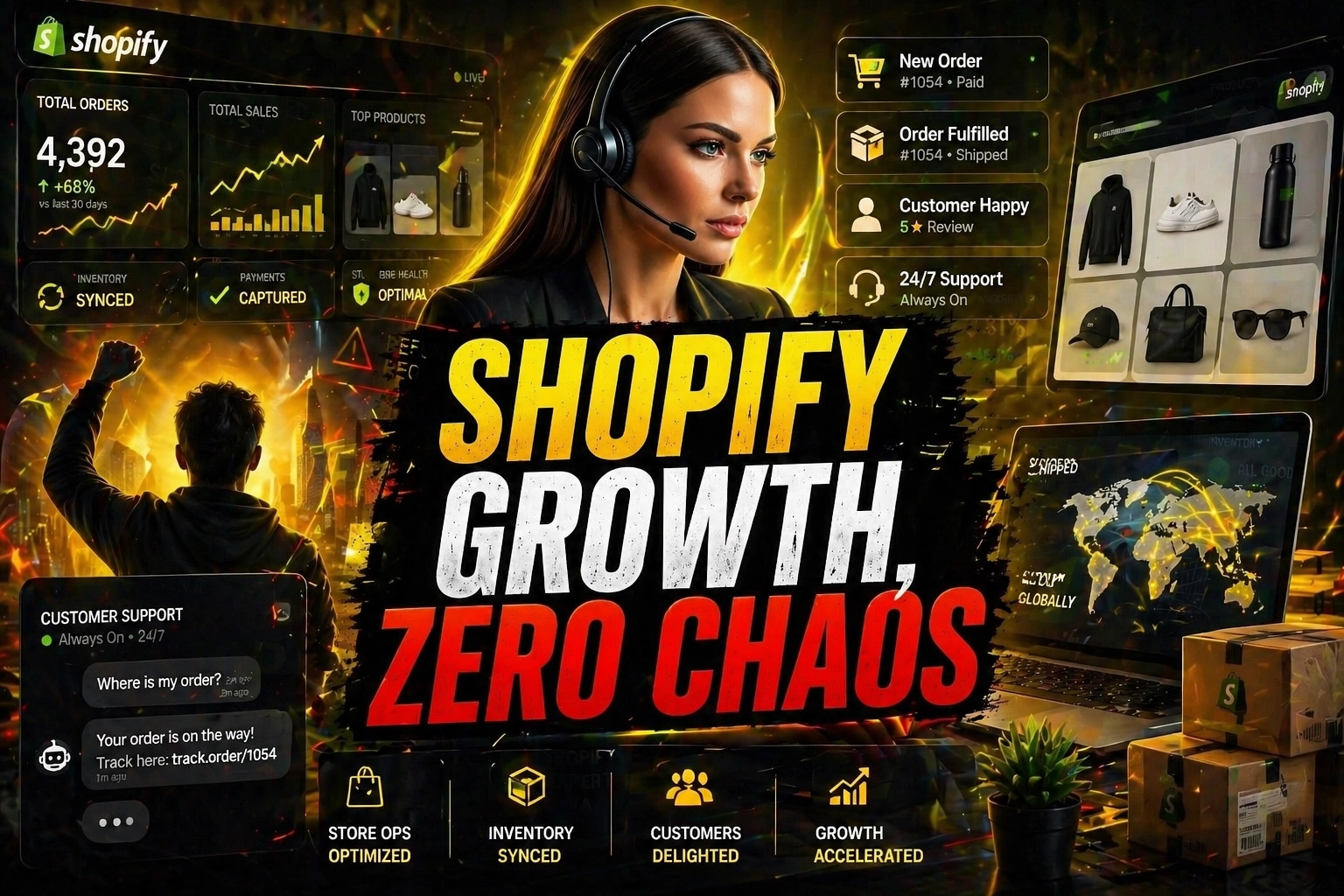
A Shopify Virtual Assistant is one of the smartest hires a growing ecommerce brand can make in 2026. As Shopify gets faster, more guided, and more complex, founders are discovering a simple truth: better tools do not remove backend work. They make clean execution more important.
That is exactly where a Shopify Virtual Assistant fits.
The Shopify Winter '26 wave has pushed merchants into a new operating environment. Sidekick is more useful. Admin workflows are quicker. Merchandising updates are easier to push. Product edits can happen at scale. Many brands describe this shift as Agentic Commerce, meaning a store can move faster with stronger platform guidance and better decision support.
Sounds great. It is. But it also creates a new problem.
When stores move faster, mistakes move faster too.
A Shopify Virtual Assistant becomes the human control layer. They review outputs, clean data, sync inventory, manage exceptions, support customers, and keep the brand from drowning in Admin Debt. At Virtual Nexgen Solutions, that support starts at $8 per hour, compared with roughly $60,000 per year for an in-house ecommerce admin role.
Why Shopify Brands Hit the Transaction Trap
Growth creates admin work. Every new order brings shipping updates, support questions, product maintenance, returns, and backend cleanup. That is the Transaction Trap. Revenue goes up, but the founder gets pulled deeper into repetitive tasks.
Here are exactly 6 daily pain points growing Shopify stores deal with:
- Support pileups from WISMO tickets, damaged item complaints, and order edits.
- Catalog drift across titles, tags, variants, collections, and metafields.
- Inventory mismatches between Shopify, 3PL systems, and actual sellable stock.
- Returns confusion that slows refunds and increases repeat tickets.
- Klaviyo neglect where flows keep running but performance slips.
- Founder bottlenecking where the owner becomes ops manager, support desk, and merchandiser.
Ignore these long enough and Profit Leakage shows up everywhere: missed sales, canceled orders, lower retention, weaker reviews, and wasted founder time.
Agentic Commerce Needs a Human Operator
Agentic Commerce is not about replacing people. It is about giving the right person more leverage.
Shopify Winter '26 made store operations faster. Sidekick can help draft content, surface information, and guide backend tasks. Bulk edits are more practical. Admin navigation is smoother. Merchandising moves quicker.
That speed only helps when somebody checks the details.
A Shopify Virtual Assistant supports AI-driven ops by reviewing what the platform accelerates. They do not trust first drafts. They do not push bulk changes blindly. They validate product data, confirm collection logic, test live pages, and catch edge cases before customers do.
That human review protects the brand from:
- sloppy product pages,
- broken collection filters,
- duplicate or hidden SKUs,
- inaccurate inventory visibility,
- off-brand copy,
- and support confusion after bad updates.
In short, the platform gives speed. The VA gives judgment.
What a Shopify Virtual Assistant Actually Handles
A specialized Shopify VA can take over 10 high-impact tasks:
- Daily order audits to catch fraud flags, address issues, and fulfillment blockers.
- 24/7 WISMO handling to reduce repeat support tickets.
- Product listing creation with SEO-friendly titles, descriptions, tags, and collection logic.
- Sidekick output review before product, content, or merchandising changes go live.
- Klaviyo flow maintenance for welcome, abandonment, and post-purchase sequences.
- Inventory reconciliation across Shopify and 3PL or warehouse records.
- Returns coordination for approvals, restocks, refunds, and exchanges.
- Gorgias ticket handling for damaged items, missing shipments, and disputes.
- Bulk merchandising updates for pricing, seasonal pages, and collection cleanups.
- Storefront QA after app installs, theme edits, or promotional changes.
This is the work most founders keep doing too long. That is usually when growth starts feeling suspiciously similar to burnout.
24/7 Customer Delight Is Revenue Protection
Customer support in 2026 is not just a service function. It is a margin function.
When support is slow, customers ask again. Then they ask louder. Refund requests rise. Reviews get sharper. Chargeback risk climbs. Repeat purchase intent drops.
A Shopify Virtual Assistant keeps the support queue from turning into a loyalty killer.
They work inside Shopify, Gorgias, Zendesk, Shopify Inbox, and shipping portals to answer tickets quickly and clearly. They handle:
- where is my order requests,
- shipping delays,
- order edits,
- return questions,
- exchange requests,
- damaged item claims,
- and pre-purchase product questions.
Fast human support matters because customers do not want vague scripts. They want a clear answer, a next step, and a brand that seems in control.
A good VA improves:
- first response time,
- customer satisfaction,
- review outcomes,
- repeat purchase confidence,
- and founder focus.
Inventory Syncing Is Where Trust Breaks Fast
Inventory syncing is one of the biggest hidden risks in ecommerce. A delayed warehouse feed or messy SKU setup can trigger oversells, backorders, support tickets, and refunds in a hurry.
A Shopify Virtual Assistant helps keep inventory clean by:
- comparing Shopify counts against 3PL data,
- checking bundle logic,
- reviewing stuck fulfillment statuses,
- flagging stock mismatches,
- monitoring tracking sync issues,
- and updating the storefront when data changes.
This matters more in the Shopify Winter '26 environment because brands are making changes faster. When the backend is more active, accuracy matters even more.
Customers do not care why a count was wrong. They care that they bought something you could not ship.
That is why inventory syncing is not a background task. It is customer experience work.
5 Shopify Task Areas That Need Help Most
1. Product catalog management
Keep titles, images, tags, variants, metafields, and collection rules clean.
2. Customer support and disputes
Resolve WISMO, damaged goods, exchanges, and refund issues before they escalate.
3. Returns operations
Track approvals, warehouse check-ins, refunds, restocks, and exchange decisions.
4. Email retention management
Review Klaviyo flows, update messaging, and maintain post-purchase communication.
5. Inventory and fulfillment control
Reconcile counts, review sync issues, and prevent overselling.
6 SOPs That Make a Shopify VA Immediately Useful
1. SOP: Order Processing and Fulfillment Exception Review
- Open Shopify Admin and review all new paid orders.
- Check payment status, fraud flags, shipping details, and fulfillment readiness.
- Flag incomplete addresses, duplicates, and risky orders.
- Confirm orders synced correctly to the shipping system or 3PL.
- Release clean orders and log exceptions.
- Prioritize high-value orders first.
2. SOP: Product Listing Creation
- Gather product specs, images, pricing, and keyword targets.
- Draft titles, descriptions, bullets, and metadata.
- Rewrite weak copy so it sounds on-brand and useful.
- Add tags, collections, metafields, and alt text.
- Preview on desktop and mobile before publishing.
- Review every draft before it goes live.
3. SOP: WISMO Ticket Handling
- Filter all shipping status tickets.
- Check the latest carrier scan and estimated delivery window.
- Reply based on the actual shipping status.
- Escalate stalled packages quickly.
- Tag root causes for weekly review.
- Close the loop once the issue is resolved.
4. SOP: Returns and Refund Management
- Review all incoming return requests twice daily.
- Check eligibility against policy.
- Approve, deny, or escalate with one clear message.
- Track inbound return shipments.
- Process refund, exchange, or store credit after inspection.
- Log return reasons by SKU and issue type.
5. SOP: Inventory Reconciliation
- Pull current stock counts from Shopify and your warehouse or 3PL.
- Compare available, committed, and incoming quantities.
- Flag mismatches, oversell risks, and duplicate SKU issues.
- Investigate before changing live counts.
- Update verified numbers in Shopify.
- Record recurring problems in an exception tracker.
6. SOP: Storefront and App Health Check
- Review recent app installs and theme changes.
- Test homepage, product pages, cart, and mobile experience.
- Look for broken widgets, missing badges, and display errors.
- Confirm banners and collection links point to live destinations.
- Document issues and coordinate fixes.
- Re-test after promos or major edits.
Software a Shopify VA Should Already Know
A strong Shopify Virtual Assistant should be comfortable in:
- Shopify / Shopify Plus
- Sidekick
- Gorgias
- Klaviyo
- ShipStation or 3PL portals
- Loox, Okendo, or Judge.me
These are not random tools. They are the operating stack behind product accuracy, support speed, customer retention, and inventory control.
Why the Cost of Inaction Is Higher Than the Hire
If nobody owns the backend, your store pays for it in slow leaks:
- stale product pages,
- missed support messages,
- messy returns,
- inventory errors,
- under-managed email flows,
- and founders spending prime thinking time on admin work.
That is Admin Debt. That is Profit Leakage. And it gets worse as order volume grows.
Virtual Nexgen Solutions provides specialized human Shopify Virtual Assistant support at $8 per hour. That gives growing brands a much lighter path than hiring in-house at roughly $60,000 per year. More importantly, it gives the store someone who can actually own the daily execution layer.
Need help cleaning up Shopify operations before the next growth push creates even more backend chaos?
Book a 30-minute strategy call with Virtual Nexgen Solutions
Frequently Asked Questions (FAQs)
What does a Shopify Virtual Assistant do every day?
A Shopify Virtual Assistant handles order reviews, listing updates, support tickets, returns coordination, inventory checks, merchandising changes, and basic Klaviyo support.
How does a Shopify VA help with Agentic Commerce?
A VA reviews Sidekick-assisted work, validates data, checks store updates, and makes sure faster Shopify workflows do not create expensive mistakes.
Can a VA manage Gorgias and Klaviyo?
Yes. A specialized ecommerce VA can handle support tickets in Gorgias and maintain core retention flows in Klaviyo.
Why is inventory syncing such a big deal?
Because bad stock data leads to oversells, cancellations, delayed shipments, customer frustration, and wasted support time.
Is $8 per hour realistic for Shopify VA support?
Yes. Virtual Nexgen Solutions offers specialized Shopify VA support at $8 per hour, which is far lower than the cost of an in-house ecommerce admin role.
When should a founder hire a Shopify VA?
Hire when repetitive backend work starts stealing time from product growth, marketing decisions, and customer strategy.
What tools should a Shopify VA already know?
Look for experience with Shopify, Sidekick, Gorgias, Klaviyo, shipping portals, and review platforms like Loox or Judge.me.
How quickly can a Shopify VA start helping?
Most stores can see quick wins within the first week by cleaning support queues, reviewing listings, tightening order workflows, and fixing inventory issues.